I visited this East
African country for the first time in 1997 and then returned yearly from 2000
to 20003, again in 2007 and this year. Tanzania has two unique treasures, the Ngorongoro
Crater and the calving of the herds in the Serengeti during late January to
early March. The crater is considered one of the Wonder and is largest
volcanic caldera in the world. Descend
into the crater is by a steep road as well as the ascent. What is interesting
is that driving into it the vegetation to the sides of road are mostly candelabra,
cacti, whistling acacias and other kinds of desert type plants. But in the way out, the vegetation is
different and the wall of the crater is covered by vegetation resembling a
tropical forest. There are two micro climates
controlled by their location in the rim of the crater. The first time I
visited, the Maasai were not permitted to bring their cattle into the crater
for grazing. But this has changed and
they are allowed to bring the cattle in and out daily. This is a hard life; you
can see them bringing the cattle early in the morning and listen to the cows’
bells. The wildlife in the crater is no
different from that of the Serengeti other that for a population of lions that
seems to have a darker mane. Black
rhinos are found here and are constantly guarded to prevent their poaching for
the horns as well as other ungulates.


Birds’ area abundant particularly in the winter because of
the northern hemisphere migrants that come here for the season. While I there, the yellow-billed storks were
getting ready to return to Europe and they could be seen circling the thermals
overhead ready to head north in the evening, the next morning they were
gone. Other birds are locals and stay
all year round such as the Egyptian Geese, the Black Crowned cranes and the
Abdim’s storks.


Driving west from the crater I headed to the Serengeti and
after registering at Naabi Hill gate, entered the park proper. The facilities at Naabi Hill, has grown and now
there are several tented camps there as well as a trail up the hill to view the
plains of the Serengeti interrupted by the rock outcrops called Kopjes. These rocks formations are unique and during
migration, one can see lions resting in the top waiting for the approaching
migrating herds; once these get close, they descend for their meals. The kopjes are also a great to spots leopards
that often use them as dens to raise their cubs.

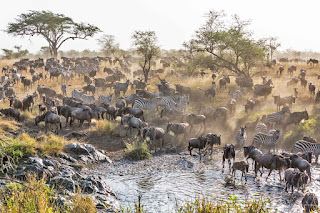
Witnessing the calving is a privilege, I was lucky to see it
twice during pass visits. This year due
to the drought, the herds were dispersed and not all have calved in unison as
is customary; not many calves were being born.
The dropping of the calves by both the wildebeests and the zebras that
migrate together, it tied to the rains.
Still, lots of activities in the drying-up waterholes is going on. After so many years of visiting Africa I had
never seen a male bushbuck, finally one late evening at sunset there it was,
walking towards the waterhole. The male
bushbucks tend to be solitary and mostly active at night; probably the reason
why I had not seen one before.



These waterholes also provide habitat for the birds to feed
and built their nest. I had the
opportunity to observe the interactions between Black winged Stilts and a
Goliath heron, the biggest in the world.
The heron was encroaching into the stilts nest and they were defending
it. Notice in the second image below
that the heron was standing in the nest with the eggs. The encounter went on for considerable time
but eventually the heron walked away without damaging the nest.


The Retina Hippopotamus pool in my opinion is the best place
to photograph these animals of what I know of Africa where they can be found
here in great numbers. The best time to
go is early in the morning when the light is best and the tourist tours have
not arrived yet. Another plus for going earlier is that the hippos are
returning to the pool after spending the night out grazing in the nearby areas.
There is always a fight going on, those in the pool trying to keep the incoming
ones from taking their places. Sometimes
the fights get bloody but they are mostly limited posturing with a lot of
noise. Back in 2007, I had positioned
myself below the bank of the river so that I could photograph the hippos at eye
level with the surface of the water.
Suddenly my drive yelled at me that there was a crocodile swimming
underwater heading for me; I did not bother to looks and flew up the cliff. I guess the guide did not want to lose an old
costumer since I had traveled with him several times. Notice in the first image below the yellow-billed
ox-peckers feeding in the blood of the hippos.
They peck these wounds open but it appears not to bother the hippos
much.


Backtracking from the Serengeti east I headed for Ndutu Lake.
In the past this area has been very productive for sighting leopards and the
only place I had seen bat-eared foxes in Africa. As the rest of the area, the drought has keep
everything dry of the lake, just a few wet green areas left. However, the
giraffes, cheetahs, warthogs, some antelopes and the lions were there but very
few elephants
Ndutu Lake was a dust bowl and the few safari vehicles there
raised large clouds of dust. This and
the heat, made the visit not too pleasant but I was greatly rewarded
photographically. One photographic
safari vehicle had so many photographers that the cheetah got mad for not been
tipped. Another first for me was the
sighting of a Steenbok, a species of antelope rarely seen here.
Great wildlife photographs are captured two ways; (1) by
been at the right place at the right time (lucky) or (2) by stalking a subject,
positioning to get the best light and framing, being patient and alert for when
the action happens; usually no second chances. I had seen the leopard below the evening
before so I knew where he was and returned the next morning and found him. I followed him and when he lay down next to a
tree, I waited. It was still cool in the
morning and I knew that when it got hotter later on in the day, he will climb
the tree to catch the breeze. I got the
image!!!

Finally I stopped at Tarangire Park, that has the largest
concentration of elephants. These giants
are intriguing to watch and I spent hours with them just watching and learning
about their behavior. How they protect their young, the ways they communicate
by sounds, flapping of the ears, touching each other with the trunks or by the
way they position them; kind of a sign language. How many elephants in the first image below? The second image shows a young ones playing
with dried mud balls. The one to the
right will pick a ball with its trunk, put in its mouth, rolled around and
dropped it. Then will repeat the process
with other ball again and again. Notice the younger one to the right also
playing in the dirt…just like human children.


