Saturday, January 1, 2011

Goodbye 2010

While looking back at my images for 2010, I found difficult to define the year; so many places, so many experiences. I will start with my forgotten trip to Maine in August; it was not a destination but a disruption of of a trip to Canada by sickness and a broken vehicle. But at least I got a shot of the Bass Harbor lighthouse, one of the most photographed in New England.
The most challenging trip was to an Eskimo village in the Beaufort Sea, Alaska. We contracted with an Eskimo guide to take us to photograph polar bears by boat. He took us to a sand spit where we landed to photograph some adult bears that were sleeping. As we approached them, one woke up, started to sniff the air and started to walk towards us. When I looked to the Eskimo, I noticed that he was drinking coffee but could not see the rifle that he was to carry for our protection. I asked him where the rifle is and he very coolly responded: in the boat. I glanced towards the boat and I saw that it was about 150 feet away...I knew I could not outrun the bear. Decided that if he charged, I will stand my ground and photograph him as it ran for his meal. The bear may have decided that I was not too appetizing, turned around and went to sleep. A while later, we ran into a mother bear with two cubs, they approached us while in the safety of the boat. I got my images; one of the cubs was playing with a bird feather is above.


I am not a city person but travel requires their visits as ports of entry and departure for more pleasant destinations. From the mundane signs in New York City, to the gory colors of a bench in Berlin, the camera could not resist them, what am I to do, it runs my life. So I obeyed and recorded the sights. But there is also beauty, as the sunset image of a building in Santa Fe three weeks confirms. Imagine, a year ago!
Familiarly creates contempt which causes me to ignore the area where I live. The last couple of weeks brought historical high snowfalls to the region, so I was suffering from cabin fever. Looking through the backyard windows, saw the cold and shivering birds, so got the camera out despite the low light, got rewarded by a female cardinal, my best bird photo for 2010.
As I search for this year's destinations, don't know where I will find myself next month. So distant, not much time, let you know when I get back. Best to all in 2011.

Monday, December 20, 2010

Bosque del Apache...Again!!!

I returned to Bosque more as a social than a photographic destination because a few of my photographic traveling friends decided to meet there this year. Bosque is a challenging place to photograph mostly due to the lighting conditions. Most rewarding photo ops are early at dawn or sunset when the lighting levels are low and the reds overwhelm the rest of the color spectrum. Another issue, is that the prime locations for shooting mostly face the east in the morning and the west at the end of the day, so one finds himself shooting against the sun. The Sandhill Cranes that winters is what makes Bosque famous; you can visit last year's blog by going to the older posts at the end of the page.
There is something primordial about this bird that attracts me, it has remained unchanged for millions of years and its peculiar calls is reminiscent of other similar species. I have seen several species of cranes
around the world but my favorite is the black crowned crane in East Africa.

I appears that the interest in cranes is worldwide, just as in Bosque, there is another in Spain (DESDE MI CHAJURDO: "Festival de las grullas" ) that I found out from Anastacio's Fernandez blog. I happened to be in the festival in Bosque last year by cheer coincidence, there may have been at least a million dollars of long lenses lined along the marshes paralleling Route 1.

There are other migrating birds in Bosque, with the snow geese being to be most numerous. What great spectacles of nature is seeing at these
birds in unison noisely exploding into the air early in the morning to fly to feeding areas near the park. It is quick and if one is not ready, the action will be missed.

Bosque offers a refuge from hunting, but I could hear the shotgun of hunters firing at the birds from areas surrounding the park. Ironically some of the areas were hunting was taken place, are owned by the Federal of State government but were opened to hunting. At least a larger buffer area should be provided "free of hunting" to allow the birds to gain altitude and spread throughout the countryside.

There also bald eagles, harriers, smaller falcons, grebes, herons, cormorants, quails, songs birds; more than 371 species of birds have been recorded in Bosque. I was able to photograph perching on a tree above; a first one for me.


Mule deer was easily seen, although shy, they would expose themselves if you took the time. I saw a young deer next to a ditch at the end of a day, I suspected that he wanted to drink, I waited, and was rewarded. But all that flies in Bosque does not have feathers as confirmed below.


Usually the tradition at Bosque is to wake up early at dawn and run to refuge to get a choice photographing spot. After the birds depart the refuge, one cruises the park roads for a while and then go to San Antonio or Socorro for breakfast. Afterwards to the hotel to edit the images or catch some sleep. In the afternoon one returns to Bosque to photograph the birds landing at the swamps to spend the night. This year, I skipped the siestas and roamed the roads in the vicinity photographing other items of interest.

Tuesday, November 30, 2010

A detour around Southern Coastal States

In October, I took a drive across of the states of North Carolina, South Carolina and Georgia. I headed south from Virginia in I-95 and close to Florence, North Carolina, got off the interstate and drove around the country roads. Abandoned farms with collapsing barns and rusting farming equipment were numerous and presented excellent photo opportunities and causing. I only wished that those broken down buildings with saddleback roofs could talk.
The towns are not in better shape, the only areas of activity are the crossroad roads at the center of town with sleepy traffic light (even them were slow in changing colors), with a couple of gas stations with signs advertising gasoline for exactly the same price; where is the competitive spirit?
Other businesses such as drugstores and barber shops were boarded up and for sale. Old tobacco warehouses are closed and crumbling down and usually one grocery store is open. One does not see much traffic or people walking in the streets. Where have all the people and industries gone? Not even Golden Arches!!!
Returning back to I-95 from the country roads, I continued on my way south towards Savannah, Georgia, where I first stopped at Fort Pulaski, in Tybee Island. It was completely built of bricks and offered no protection from the Army of Northern Aggression Parrot rifled cannons during the Civil War.
The Union forces took over the fort in April of 1862 in less than 7 hours
but Savannah remained in rebel hands until the end of the war. After visiting the fort , I headed to the city for the night.
I was in Savannah for the first time 30 years ago. The city lost its old run down looks and is now bursting with activity. The historical center of town had been gentrified with old houses restored to their former glories. One major difference in the architecture of Savannah when compared to that of Charleston, is that the original core of the former is dominated by row houses with no spaces in between, while detached
home separated by walls and gardens are predominant in the later.
Close to Savannah is Wormsloe Estate, famous for its Live Oak Avenue of more than 400 trees planted in the early 1890's. These avenues of oaks with the ubiquitous Spanish mosses are common throughout the south antebellum plantations, but this is the longest I have seen. The rest of this site is mostly ruins, the oldest one, the Tabby Ruins, dating back to the 1740's. What I found interesting was the walls left is that they were made of oyster shells mixed with lime, sand and water. The oyster shells came from the oysters eaten by the Indians, who threw them into piles called middens. This type of construction I have not seen in Virginia where wood was mostly used by the settlers in Jamestown.
While cruising around the city, I saw a sight familiar to astronauts in space, but in this case I did not need to get in a Soyuz rocket. I saw this huge compressed gas cylinder painted as the earth; continued to drive up the road but that image stayed with me...I have to return and photograph it. The steel planet was in the a yard of an abandoned house surrounded by a
brick wall. I peeked thru the rough iron gate and saw numerous feral cats all over the yard. Much to my surprise, the earth was not along, its faithful companion, the moon, was there too assuming the duty of a mail box. I was told that the tanks was built to store propane gas but the city in its wisdom prohibited its intended use due to safety concerns. Wonder who was the dreamer who created a planetary system out of an abandoned gas tank!
Stay tuned, I will follow with another blog going up the coast to Charleston,
South Carolina

Thursday, November 11, 2010

Chincoteague National Wildlife Refuge

After several days of roaming across the Atlantic Coast southern states, I ended my travels in Chincoteague, Virginia in early November. Now I find myself with thousands of images and wonder: Do I like to travel or photography better? I still have 63 gigabytes of Alaska images that I have not even look at. Maybe photography is the instigator to travel.
I used to visit Chincoteague in the early 1970’s when I started photographing birds but it has changed somehow for the worst and slightly for the better. In the old days one was not limited inside the park to specific roads as today but the roads were not all asphalted and one was not allowed to get off the vehicles. The town outside the park was just limited to the area around the bridge leading to the mainland and consisted of two main streets and one place to stay. Today all roads are asphalted with multitude of hotels and businesses catering to the tourists.
In the summer the beach is crowded with bathers but at this time of the year, the beaches are only visited by the migrating shore birds and a few fishermen. I noticed that the wildlife is easier to approach as they seem habituated to the presence of humans without been shot at. So despite the economic development, I would say that the wildlife has not been adversely affected yet.
I was rewarded during this visit with two new species of mammals that I have never seen before; the river otter above and the grey squirrel below. There were a couple of otters and these worked the shores of the ditches on both sides of the road leading to Maddox Boulevard. One of the otters captured an eel and ate it in plain view.
I ran into a gray fox squirrel while walking in the Woodland Trail, I was surprised as to their larger size and grey color. I saw wooden boxes in the trees along the trail and though that they were there for wood ducks nests, later on I found out they were for the squirrels. I also learned that they are about 300 squirrels in the island and it is a threatened species better known as the DELMARVA fox squirrels.
Lots of migrant snow geese and other species spend the winter here; in the day I was there I saw an estimated 1200 geese in the ponds. What is unreal is that could approach these birds within 30 feet even though they are hunted as soon as they leave the boundaries of the park; is like if they know the difference between a shotgun and my telephoto lens. It is magnificent to listen to their calls while landing.
I ended the day with a White-tailed deer running across the Snow Goose Pool and started my 3 hours drive home.

Saturday, October 9, 2010

Denali, Day and Night

Both of the images are High Dynamic Range (HDR) that represents most of the visible world, therefore some what you see may be bit unnatural. I did the HDR using Photomatix 3 Pro. Then I opened them in Photoshop CS5, cropped them, applied curves to correct colors and finally sharpening. The above image was taken at Wonder Lake, near Mile 85 of the Denali Park Road. While I was there taking the images, another photographer stopped to tell how lucky I was; he has been coming here for the last 27 years and never seen Mount McKinley so clear, not a cloud in the sky. Maybe I was lucky twice; I also won the Denali Lotto which permits winners to drive their own vehicles for a day inside the park beyond Milepost 15. This is allowed once a year at the end of the season for about 4 days. Other than on this occasion, one has to ride a bus past the gate at Milepost 15 at the Savage River Bridge. Due to the restrictions of the blog, I was unable to properly size the images but if you click on them, a larger image may be available depending in your settings.

What you see above are the Northern Lights or Aurora Borealis taken near Denali. This image is also HDR but with a different twist. When using HDR, one changes the exposures to obtain more detail of the dark and light areas of an image. In this case, I did not change the exposures but I rather used time intervals to capture the changes in the lights, as they expanded and contracted across the sky. This technique may be called stacking by some. Since I could not cover the lights across the sky using a 16-35 mm lens set a 16 mm, I used another secret trick of mine (well not secret any more after you read this). I just set the camera in the tripod with the lower left corner and the upper right corners of the viewing frame aligned with the horizon. So I am really splitting the frame with an imaginative diagonal line and aligning that line with the horizon, then I crop a bit the ends to make image rectangular. The University of Alaska has a website that predicts the probability of seen the northern lights (http://www.gedds.alaska.edu/auroraforecast/) and I relied on it to wake up in the middle of the night and search for them. It worked for the night when this image was taken. While at ANWAR, where the photos of the bears of the previous blog were taken, this site showed very poor probabilities of seen them so to bed I went. When I woke up the next morning, the first thing the guide tells me is about the extraordinary northen lights seen that night. These were in the form of waving colorful curtains that cover most of the sky. So when I asked him why he did not wake me up, he responded : "You told me that you came to see Polar bears."

Monday, October 4, 2010

Polar Bears

After traveling more than 10,000 miles by land, air and sea, I am back in Virginia after meeting with Polar Bears in the Alaska National Wildlife Arctic Refuge (ANWAR). They are the ultimate predators and being close to them with not protection, other than a guide with a weapon was unnerving. Although I have been in the proximity of lions, elephants, rhinos and leopards in Africa, there I was sheltered by a vehicle that could speed away from danger. In ANWAR, I was on foot on land with no chance to outrun the bears, they can do 30 miles per hour; more than than the 5 that I can achieve over a short distance. The outcome is obvious.

I saw about twenty bears, with several females having 2 cubs each, do not know is that is the usual number. On one occasion, one family approached in an inquisitive manner since I am still here; if the mom who have wanted to provide the cubs with a dinner, I would not be here writing this blog.

One of the cubs was extremely curious and came within 20 feet and performed by standing in its feet and moving the arms as umpire signaling in a football game. Another found a white feather, which it examined closer and then started playing with it.

While searching of the bears in a small boat, ran into two bears swimming and was able to photograph them. They showed not interest and continue on their way. These animals are large and can swim hundreds of miles, one raised its body about 3 feet above the water to look around. I am quite sure that if they wanted, they could have come aboard the boat or turned it over and get meals inside. I had been many places with wild animals, but no where with the level or risk or excitement that I had here.


Sunday, September 12, 2010

Winter in the Southwest

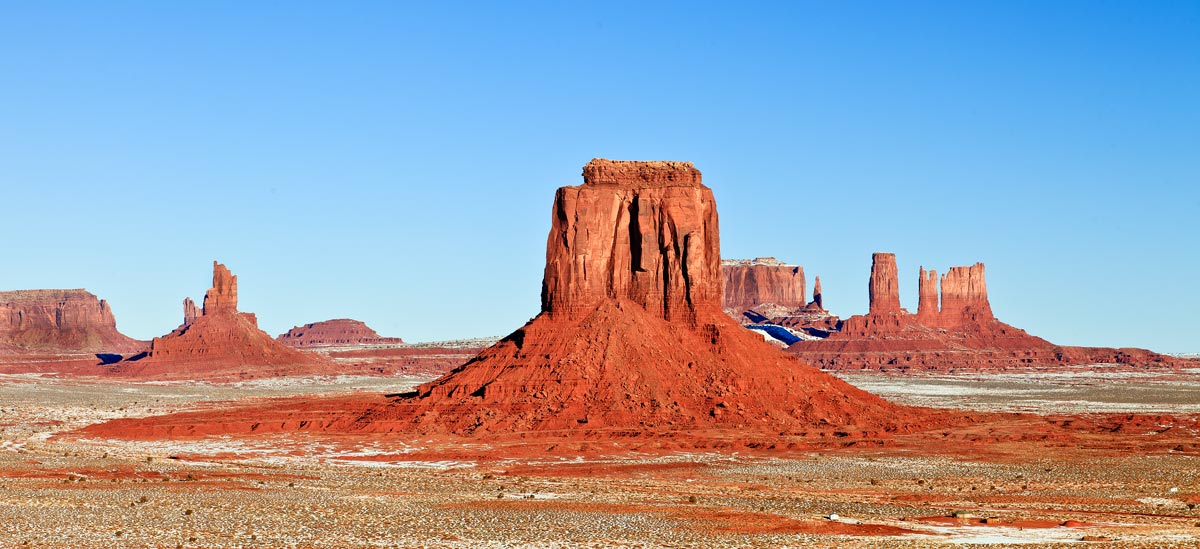
I was in the Arizona and Nevada early in the year. I decided to blog now with these images because it will be a while before I have another chance. Monument Valley is one of the most photogenic sites in the USA. It is vast and interesting because of the topography and driving with snow is tricky, although it looks as there is not much of it.

The predominant red color of the Southwest is challenging to manage, it is either over or under saturated. The desert is mostly deprived of vegetation and other than short grasses, one may encounter a lonely dead tree. You wonder where all the water has gone considering that the mesas were created by water erosion.

While driving from Monument Valley to Page, I passed this windmill and continued but had a change of heart and returned. I had to capture the painting on then tank of a typical western scene, it just fitted perfectly in the landscape. The itinerant artist who created the scene left no marks as to whom he was, might was well, in the desert nothing last long.

I was at the Antelope Slots two years earlier in late summer. I just wanted to see how different the lighting was in the winter; quite honestly, there was not much of a change in brightness or coloration inside the slots
but there was nobody else there to disturb the sand creating a dusty air. Below is and image of the surface above the slots, I guess not many has seen it in photos since most of the photogenic interest is underground.

Next is an image which is most familiar, since hundreds of photographers come to the Slots yearly to capture the “Award Winning” photograph. Mostly what you see printed, is not what they really look like because of the difficult lighting conditions and the artistic freedom provided by Photoshop. Most of us processing images have a different recollection of what the “true” colors were. What the eyes see and the mind remembers is not what the camera records. Regardless, the hues and the textures captured are pleasant.

The southwest had a record snow fall that caused great damage and blocked major highways for days when I was there. Fortunately, I was able to enter the Grand Canyon from the northeast. Walking to the edge of the canyon with 24 inches of snow was tedious; the tripod became the third leg that allowed me to reach the edge. But there was nothing to fear, I ran into two park rangers on skies patrolling the rim ready for the rescue. Was the walk worth it? You decide. the result is below.