Tuesday, December 6, 2011

Rhapsody on the Rhine River

Arrived in Brussels October 17 and was taken by bus to the M/S Rhapsody river cruise boat in the port of Antwerp where I spent 2 days.  First thing I saw was Larger Wapper, a famous local water spirit next to the Stone, a medieval castle. Walking further up ran into the Aan Stroom Museum, a large red box set in an open plaza. When in front of City Hall, saw a group of artists dressed in early 20th century outfits; I got the beauty among the group. This is a very historical city as well as an industrial powerhouse full of photo opportunities as one walks down the streets.


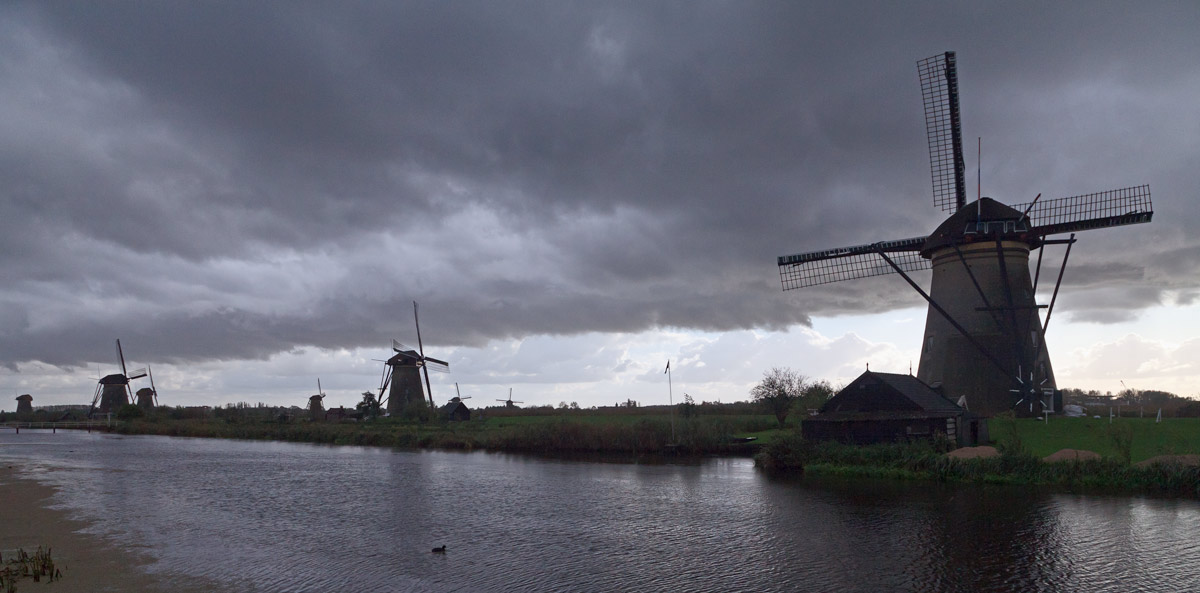
I had been to Holland several times with the intention of visiting Kinderdijk; finally got there.  It is a UNESCO World Heritage Site and the name means Children's Dike. It has 19 windmills built in the XVI century and were used to pump water out of the polders; most of the windmills I had seen before were used to grind grains. While here, I suffered a hailstorms, rain and sunshine, all within an hour.  What an opportunity to get a variety of images of the windmills.


Nijmegen is the oldest city in Holland, an as in most other places visited during this river cruise, the Romans were there.  It was bombed by American planes and heavily damaged but today, there are no signs of it.  Found store windows full of those wonderful cheeses for which the country is known and other items of clothing.  And the City Hall has the typical Dutch architectural style.


Sailing up the river Rhine,  arrived in Bonn, the former capital of Germany before the fall Soviet Bloc.  Most of the government activities were move to Berlin but it still preserves an air of sophistication and is the birthplace of Beethoven and Schumann.  The German Army Band was playing next to Bethoven statue and collecting donations of the wounded veterans of the Afghanistan War. Nearby is the Augustusburg Palace, another World Heritage Site, built in the XVIII century.  The most interesting part of this Palace is the stairs leading to the second floor which unfortunately are not allowed to be photographed.  The gardens date to the XIX century and were in full fall colors at the time of my visit.


Navigating up the Moselle River, the mountains in both shores were covered with grapevines exhibiting their rich autumn colors.  The famous Moselle wines originate from the various wineries along the river.  Disembarked at Cochem for the daily tour; it is in the left bank of the Moselle, it has a picturesque central area as most other cities visited in this tour.   Reichsburg Castle is the major tourist spot dating back to the XI century, it was rebuilt in the Gothic Revival Style by a businessman from Berlin in 1868.  Live in a castle was harsh, not the idyllic type that one reads about, with damsels in distress rescued by a knight in shinning armor.


Bernkastel is another city in the winegrowing region of the Moselle River; it is renowned for its gabled timber houses dating back to the XVII century. Riesling is the predominant wine variety grown here with the Bernkasteler Doctor wine being the most famous.  The story goes that back in the old days a Bishop got sick and there was no medicine that would cure him.  A winemaker came forward and promised that if he drank his wine, he will recover his health and sure enough, the Bishop got well.  As a result, the Bishop granted the winemaker the title of "Doctor."  Had the opportunity to visit the cave where the wines are aged and tasted them…very nice and "expensive" too.  Across the river there is a cliff that shows rock stratification of a peculiar red color.


One of the rewards of travel is the historical perspective gained from the various places visited.  And at Trier, the surprise was unexpected; imagine a Roman city north of the Alps. At one time, it was the capital of the Western Roman Empire where Emperor Constantine resided for a few years.  I ran into this historical giant first in York, England, next in Rome, later on in Constantinople, and now in here.  The most spectacular ruin is the Porta Nigra, the best preserved roman city gate north of the Alps; the black color is due to air pollution.  And as in any important Roman city, there are the Baths, the Basilica, the oldest roman bridge north of the Alps still in use, the amphitheater, and the magnificent Cathedral of St. Peter, another World Heritage Site. It was built after the conversion of Constantine to Christianity and is the oldest cathedral in Germany. The most famous relic here is the Holy Tunic that was removed from Jesus by the roman soldiers that crucified him.  According to tradition it was obtained by Constantine mother Helena when she traveled to Jerusalem around 328, along with several other relics. It will be exhibited to the public in 2012; your opportunity to see it.


Luxembourg is located in top of cliff next to the Petrusse River with extensive medieval fortifications, but these did not prevent it from being occupied by Germany during  World War II. It is considered a tax heaven and has the highest per capital GDP; what a coincidence. It is ruled by a Grand Duke as a constitutional monarch. Nearby is the American Cemetery and Memorial, where most of the American casualties (@ 5,000) of the Battle of the Bulge are buried. General Patton although not a casualty of the battle but of an automobile accident, is buried here at his request since he wanted to be next to his soldiers. Among the many local guides that I met during the voyage, the gentleman guiding during the tour of the cemetery is the most dedicated. It was clear that he was doing this not as a job, but as a voice from the past.  As a young child he witnessed Patton's funeral and was proud to show his photographs of the occasion.


Boppard is located in the Rhine River Gorge another UNESCO World Heritage Site. North of this city, the river makes its biggest bend with the surrounding mountains covered with vineyards. In the way to Marksburg Castle, there was a stop at a local brewery where beer, sausages and French fries were served; all was great but the fries, better than those are MacDonald's.  While cruising in the river, saw a tank that contrasted with the white truck below; war and peace?


The most peculiar thing about Speyer, is that everything seems to be tied down with a chain or cable; noticethe foot and the chairs in the street cafĂ©. The dominant point of interest is the cathedral than when finished in1061, it was the largest Christian structure.  The city was busting with activity the day I visited.


Finally left Germany and arrived in Strasbourg, France. Other than the language, there was not much change in scenery.   This city has changed ownership between Germany and France during past wars, but it appears now secured in French hands.  The Marseille, the anthem of the French revolution was composed here, but the most interesting item here is the astronomical clock inside the cathedral.  There are canal cruises in the city that are worthwhile taking; it reminds me of Bruges but in a larger scale.


Took a side trip to Riquewihr, a small medieval town whose architectural style has been preserved; almost. The first floor of every building in the main street, are tourist traps selling the routine paraphernalia except for the coconut macaroons; the competition for selling them is furious.  Merchants at each stall were given free samples, all excellent, but after eating so many I was full and did not buy any.  The locals are dog lovers, never seen so many well behaved ones; I wonder if they eat macaroons too.  In the way back stopped at a Center for Reintroduction of White Storks to Alsace.  These birds' populations have decreased in recent years; for more information go to: www.cigogne-loutre.com.  They also keep nutrias in the park.


Departed France and arrived in Basel, the end of the River Tour.  I had been in several river tours but this has been the most perfect of all.  The crew was incredibly competent and the Captain was the friendliest, they usually keep an air of aloofness but not this one.  There were 3 tour guides and all of them had a sense of humor as you can see from the photo below.  And then Susana, always cheerful and reading your body language as to when to bring the next libation.  Tot ziens, Auf wiedershen, and Aur revoir.


After the river cruise I extended in Lucerne; I was there in 1993 and other than the Chapel Bridge, had no recollection of anything about the city.  I wonder why travel if I cannot remember where I had been.  The city has more banks than tourist places. Took a train ride to Engelberg one day and from there rode the Titlis Rotair to the Titlis Glacier Station where I visited the glacier cave.   The next day flew home out of Zurich.


Saturday, November 19, 2011

The Birds of the Pantanal


So many photos, so little time to blog. From my recent blogs, you can see that the trip to Pantanal in Brazil, has been one of the most productive this year. Birds have been my favorite animals and as a result, I came back with thousands of bird images so here are a few ones. The Black-fronted nun bird above is a new species for me, as most others in this blog except for the Ringed Kingfisher.  This bird looks mostly black but if hit by the light at a certain angle it appears blue.


I have seen many herons but the Capped Heron above, is the most beautiful of them all.  When I first saw it, I had to do a double take; is this bird for real?  I did not see more than 3 of them and they were always alone; most others hang around together and nest in colonies. Those long feathers in the head are really attractive.


The Rufescent Tiger Heron had a peculiar behavior.  It is holding a catfish with a little stick and walking away from sight.  A "bird using a tool."  It shows that we humans are not the only ones.   The type of catfish the bird is carrying has very sharp fin spines.  While the fish is alive, the fins are erected and it is impossible for the bird to swallow it, so the bird waits until it dies and the spines are relaxed parallel to the body.  I saw a Ring Kingfisher with the same species of catbird; it was holding it by the tail hit and slamming it against a branch until dead, and only then proceeded to swallow it whole.


There are 5 species of kingfishers in the Pantanal, I photographed all of them but for brevity, I only loaded in order of appearance the Amazon Kingfisher, the Green Kingfisher and the Ringed Kingfisher which is the largest and most abundant.  Most kingfishers are shy and difficult to approach, but here, you could even grab them from the branches, they appear to be obliviuos to humans.  Imagine, being ignored by a bird, the ultimate insult.


There are many species of flying predators in the Pantanal but the Great Black Hawk and the Savannah Hawk were the most abundant.  They mostly feed in smaller birds but sometimes they also go after fish. 


Birds come in a variety of colors but the Jacama and the Vermillion Flycatcher are really flying jewels.  When I first saw the Jacama, I though it was another species of kingfisher because it looks similar and nest in holes in the banks of the river.  But after observing it for a while, I noticed that it seats in a tree branch, and then fly-off capture insects and returns to the same perch.  The Vermillion Flycatcher,  as the name implies, is right truly intense red; what a difference in body shape, and coloration between these two birds.  Also consider that both feed in insects that the catch while flying; why the difference in beak length?


Two birds that owe their names to their bill peculiarities are the Smooth-billed Ani and the Yellow-billed gulls.  The Ani needs such a heavy bill to be able to cracks seeds and I assume that the gull's yellow bill has something to do with breeding. In the bottom image above you can see an immature gull asking for food.


And finally, we get to the Sun Grebe, another unusually colored bird that I have never seen bird. This bird feeding behavior is unusual for a grebe, instead of diving in the pursuit of fish, it swam along the shore line picking up insects from the vegetation. I am sure that the sun grebe also dives for fish but I did not witness it.

Friday, September 30, 2011

The Jaguars of Pantanal II


One morning I ran into a collared jaguar panting with saliva dripping from the mouth.  It appeared stressed by the tracking collar.  These collars carry telemetry devices to track the animal movements; some are able to monitor physiological and environmental parameters too. While watching the jaguar, the guide told me that 3 collared jaguars were recently found dead. The rumor was that the lost of these endangered cats was caused for having the collars to tight.


There appears to be various groups involved in collaring jaguars in the Pantanal; but it was not clear if the responsible culprits were private individuals, environmental private groups or government agencies.  A wildlife management friend confirmed that it is critical how these collars are fitted to the animals, if too tight, they may cause problems.  And these are not just limited to physiological burdens but may also induce behavioral changes.  

The use of tracking collars has become widespread since the early 1990's to study animal migration patterns, territorial boundaries, etc.  As the collars became more sophisticated, they are capable of recording physiological as well as environmental parameters.  The   information is collected in the collar or transmitted by radio signals to cell phones or via satellites.  Originally the tracking devices were equipped only with a VHF beacon and the trackers have to follow the collared subjects in the field with an antenna to determine their whereabouts.  Older models also used to collect the information in the collar itself and to retrieve the data, the animal has to be recaptured again. Newer collars can be programmed to drop-off from the animal and the data analyzed.  But the trend is towards collars that transmit the data and that can be reprogrammed by telemetry.


Does the fitting of tracking collars have an impact in the involuntary user?  There was a study conducted of Florida panthers in the Everglades between 1978-79; of the 65 deaths recorded, 41 were radio collared. Of the collared panthers that died, it was determined that 33% died in fights with other panthers (is the collared jaguar impaired by the collar during the fight?).  Another factor affecting the mortality of animals is during their capture to be fitted with collars, usually with tranquilizing dart guns.  If the anesthetic dose is not properly calculated, it may result in the animal death.  Also the handling of the anesthetized animal while being collared, measured, weighted, and biological sampled, may result in additional injuries. 


Does the practice of using collars for wildlife management worth the loss of animals?    Are those involved in these practices professionally trained to safely conduct such endeavors? Are the wildlife populations benefiting from this practice?  What is the data used for?  Are there funds available to improve of the species habitat based in the data obtained if analyzed?  I have not formed an opinion as to benefits of this practice.  But is surely annoys me when I encounter collared animals in the wild.  Will there be any wilderness left?

Saturday, September 3, 2011

The Jaguars of Pantanal, Brazil

 Just returned from one of my "one in a lifetime" adventures; I was dreaming at least to photograph just one jaguar.  It was surpassed, in 8 days sighted 23 of these cats.  My first encounter was with a jaguar resting on bluff next to the Cuiaba River hidden by the underbrush (above).
 The next day, I saw a jaguar shaking a small tree and could not figure why? Then, I realized that it was knocking young flightless birds from their nests.  These were baby limpkins, and as they dropped from the tree, fell into the water and were able to swim ashore.  The leopard walked down to the river's edge, picked one chick, eat it and so on.   


 After feasting the jaguar walked up the bluff and along the shore to a sandy beach to get a drink, it paused, looked around and continued drinking.  Then went to take a siesta.
On another occasion, I witnessed a fight between two males; they appeared to be siblings just playing.  But the next day in the same area, there were 4 males and one female.  It became clear to me that the fight that I saw the previous day was not a game; they were fighting for the privilege to visit with the girl.  By this time, the scores were settled and prevailing male was mating with the "she jaguar".

One day I followed a jaguar along the shores of the river from a boat while he hunted for capybaras.  These giant rodents are very alert and can swim and dive swiftly.  He saw a family of capybaras with a young one.  As he paused, somehow the male capybara became aware of his presence, gave a sharp call to which the mom and baby responded by jumping from about 20 feet in height into the river.  The male followed soon after.