The Falkland Islands, or the Malvinas, are located in the
South Atlantic off the coast of Argentina.
To get there, one must fly to Santiago, Chile, then to Punta Arenas, Rio
Gallegos and finally to Stanley (below) in the East Falkland Island. As the name implies, it is a conglomerate of
small islands and two larger ones known as East and West Islands. The islands are cold and mostly treeless,
with small rocky elevations and peculiar rock formations that look like dried-up
river beds (but are not) and called stone runs.
The weather is mostly cloudy, rainy and windy but fortunately I had no
more than a total of one day of rain but the winds were common and at times
very strong.

Besides East Falkland Island, I also flew to Sea Lion,
Carcass and West Point Islands and all have the same topography varying mostly
in size. There are several species of
birds, and no endemic island mammals (except for the now-extinct fox). Cats were seen just in the vicinity of Stanley. Rather than going location by location, I
will go by the animals seen in the islands. The reason for visiting these
islands was to photograph the different colonies of penguins, albatrosses and
sea mammals.

The Rockhopper is my favorite penguin and the smaller of
those seen in the Falklands. They are fast when walking/hopping among the rocks
and outpaced me when trying to follow them.
Most of the other penguins set their colonies near a sandy beach for
easy access to the water. Not the rockhoppers, They choose rocky shorelines
with steep cliffs. It is amazing how
they arrive on the cliffs with the incoming waves, hop onto a rock and start
their way up to their nest. As most
other penguins, they travel in small groups where there is always one leading
the group jumping and stumbling until they reach their nesting colonies.


Occasionally a few of the rock hoppers instead of going
directly to the nesting sites, deviated to fresh water springs coming from the
side of the cliff, jumped into the pool, drank fresh water, and then proceeded
to take elaborated baths. This was unreal…I had the great thrill of watching
them, just like people coming off the ocean and going to the beach showers to
remove the salt and sand. While one was
doing its thing, others waited for their turn…and then proceeded to the nesting
areas.
The Gentoo penguin is bigger than the one previously
discussed and they nest in areas that have sandy beaches providing easy access
to the ocean. As the other penguins,
they nest in large colonies with very rudimentary nests. They were seen in all the islands but Sea
Lion Island has a beach facing East, and when they return from fishing at the
end of the day, it is a photographer’s paradise. Catching them jumping out the water is hard
to capture.
Once they arrive on the beach, they pause to preen and dry a
bit and then join others to walk inland to their partner waiting at the nest.
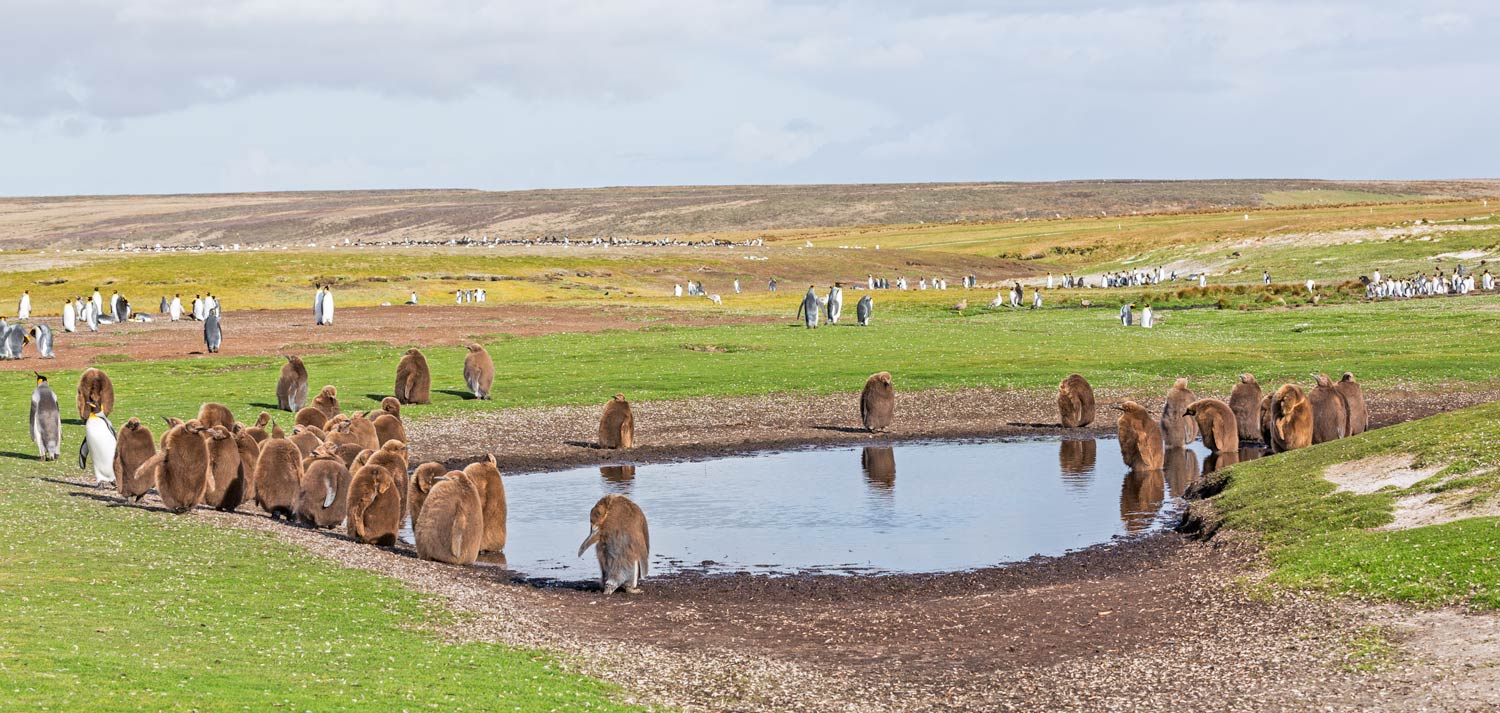
The King Penguin is the biggest in the islands and also nests
in areas similar than those used by the Gentoo but not mixed together. At the time I was there most of the chicks
were as big as the adults but covered in brown down. They would hang around in groups waiting for
the parents to return from the sea and feed them. When an adult was returning
from the ocean with food, all the chicks started begging, but did not fool the
parent, as it knew exactly who its baby was!
Magellan penguins were also seen in the islands but did not
appear to be as common as the others since.
These make underground nests and appeared to be shy; as soon as they
were approached they retreated into their nests. The Rockhopper and Macaroni Penguins are
similar, but the Rockhopper has the yellow tuffs over the eyebrows while the
Macaroni has them in the forehead; notice the difference in the third image
below. I saw all the 5 species of
penguins that reside in the Falklands.
The Falkland Steamer-Duck is endemic to the islands: it is very tame and easy to approach. There is also a Flying Steamer-Duck but I could
not tell the difference from the endemic if I saw one. A Speckled Teal was also seen.
There are also several geese
and they are below in the following order:
Kelp, Upland and the Ruddy-headed. The latter were fighting over
territory since this was the breeding season.
These fights also occurred in between species.
Pelagic birds include the blue-eyed cormorants, pale-faced
sheathbill and the southern giant petrel.
The cormorants were nesting in large colonies and were mostly bringing nesting
material. Some already had laid eggs and
on one occasion, a skua stole an egg from the nest; I was just not really aware
of what was going on I missed a shot of a lifetime…it was amazing how the skua
could hold such a big egg in his bill and fly away. The pale-faced sheathbill when first seen
looks like a white pigeon even in the way it feeds, but the bill readily
identifies it a different bird. The
southern giant petrel is impressive and aggressive; below is one eating a
cormorant and was capable of defending its meal from gulls and skuas. It takes a long time to get airborne.


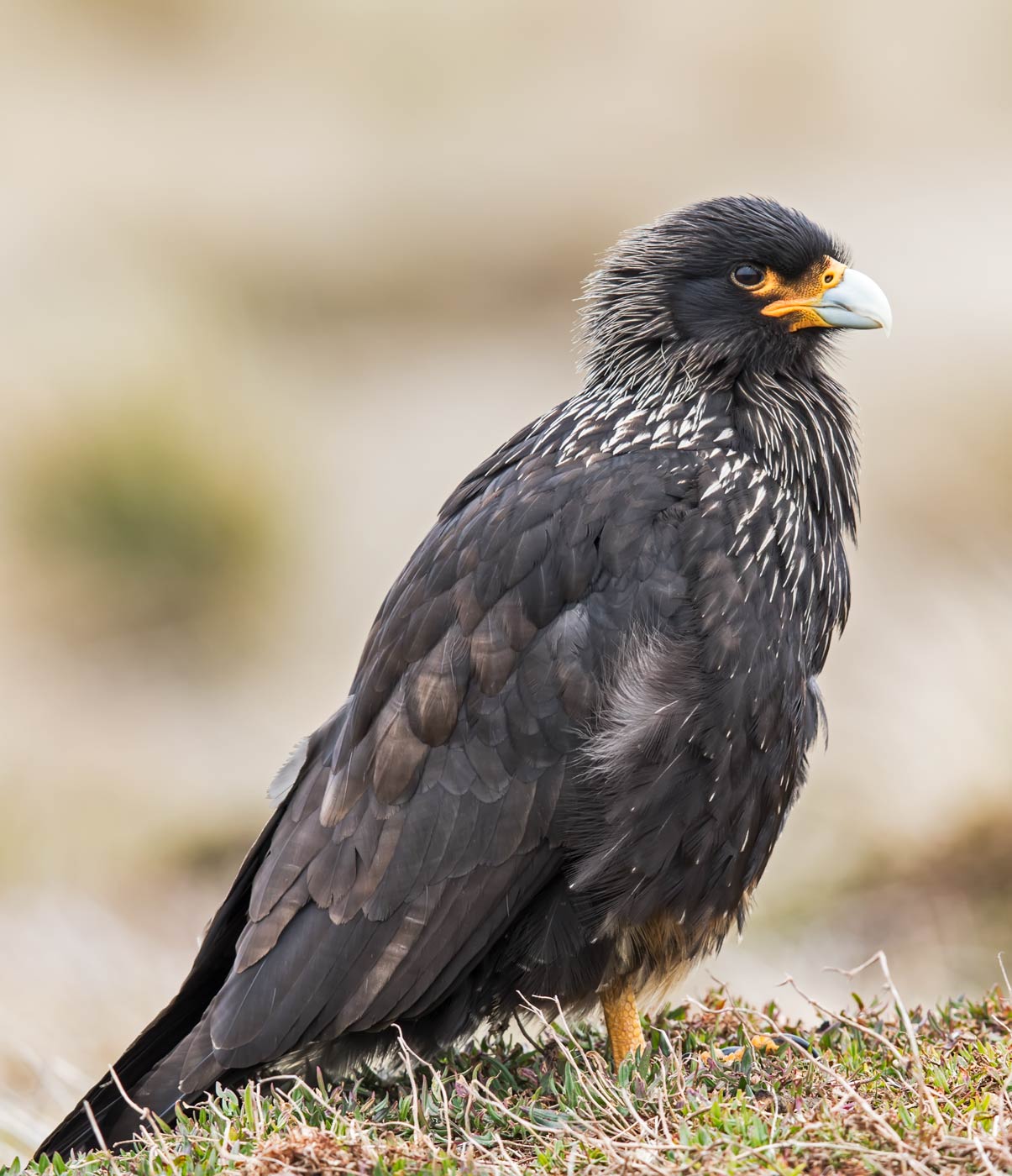
Other birds seen were the striated caracara, the Magellanic
snipe, the two banded plover, Magellanic oystercatcher (the one in the photo
was feeding a chick), the Cobb’s wren that is endemic to the islands and the tussacbird
or blackish cinclodes.
And finally the more majestic of the birds - the
black-browed albatross that nests in large colonies, its aloof attitude making it
most appealing. It allows close approach
and ignores you. If you can’t get a
great photo of this bird, you might as well retire. Below is the image of a
colony sharing space with rockhoppers. The birds are very sociable and are
always displaying beak strokes among the pairs.


Elephant seals and sea lions are abundant along the
coastline. As the name implies the
elephant seals are really big and did not mind the intrusive photographers but
were annoyed by a tussacbird picking at bugs on their skin. There also pups in the colonies. They come ashore to give birth, breed and
shed their skin once a year. There is a
group Italian scientists studying these animals and to identify them they write
their assigned names in the furs…graffiti under the disguise of science
research. I despise all these
researchers defacing animals with radio collars, bands and tags. The one below is named CIP. The last image is that of a young seal
looking in wonder at the small duckling; I was lucky to catch this moment.
I was gone for a long time and took more than 10,000 images;
it makes the selection and processing of images a tedious task. I will upload the second location I visited
prior to the end of 2015; no promises.